If I had to explain where hematology research is heading in one sentence, I would say this: the field is moving toward treatments that are more precise, more personal, and more dependent on teams that can share information well.
That raises the questions readers usually bring to this topic: What is changing right now? Which treatments look most promising? Why does collaboration matter so much in a field that already depends on careful lab work and close clinical follow-up? And, perhaps the most practical question of all, what should patients and families expect when they hear about “new research” in a blood disorder or blood cancer conversation?
This matters because hematology has become a place where several useful ideas are meeting at once. The American Society of Hematology has highlighted genome editing and cellular therapy as promising directions for hematologic conditions, and the National Heart, Lung, and Blood Institute points to stem cell biology plus new gene- and cell-based therapies as part of the research path ahead. That is not a promise that every advance will arrive quickly or work for every person. It is a sign that the field is changing in ways worth watching closely.
By the end of this article, you will have a grounded picture of the main trends shaping hematology, the therapies that may matter most in the years ahead, and the kind of collaboration that helps good ideas move from a study to actual care. If you want to keep following related talks and updates on this site, the Latest Lectures page is a good next stop, and the homepage keeps the wider collection within easy reach.
Current Trends in Hematology Research
When I look at current hematology research, I do not see one giant breakthrough replacing everything that came before. I see a field becoming more selective, more data-driven, and more willing to ask which patients benefit from which treatment rather than treating every blood disorder as though it were the same problem. That shift is important. It is also slow enough to frustrate people who want a clean answer right now.
The clearest trend is precision. Researchers are spending more time using genetic, molecular, and laboratory markers to sort diseases into smaller, more meaningful groups. In practice, that means the name of the disease is only the beginning of the story. Two people can share the same diagnosis and still need very different care depending on risk features, test results, age, prior treatment, or inherited biology.
A second trend is the growing use of high-sensitivity testing. In blood cancers, and especially in acute leukemias, doctors increasingly care about whether a treatment has pushed the disease into a deep remission rather than just a visible one. That is where measures such as measurable residual disease, or MRD, have become more important. MRD is not a magic word. It is simply a way of saying that very small amounts of disease can still be detected when ordinary tests look reassuring. That kind of detail can change the next step in a treatment plan.
A third trend is the move toward cell and gene-based therapies. The field has learned a painful but useful lesson over the years: some problems cannot be solved by adding more of the same chemotherapy. They need a different strategy. That is why blood research now spends so much time on engineered immune cells, gene correction, and treatment approaches that try to fix the biology rather than only suppress it. The American Society of Hematology’s genome editing and cellular therapy agenda is a helpful signpost for how seriously the field is taking that direction.
| Trend | What it means in plain language | Why it matters |
|---|---|---|
| Precision diagnostics | Doctors use molecular and genetic clues to split one diagnosis into more useful subgroups. | Treatment can be matched more closely to the biology of the disease. |
| MRD-guided care | Teams look for very small amounts of disease after treatment starts. | Early signs of response can shape the next treatment decision. |
| Cell and gene therapy | Researchers try to change or replace cells so they can fight disease differently. | Some blood cancers and inherited blood disorders may eventually need less one-size-fits-all care. |
| Collaborative trial networks | Many centers study the same question together instead of working alone. | Evidence can build faster and with fewer blind spots. |
Another shift worth noticing is that patient-centered outcomes are getting more attention. It used to be common to focus almost entirely on whether a treatment worked on paper. That still matters, of course. But more studies now ask what the treatment does to fatigue, long-term follow-up, fertility, transfusion needs, clinic time, and everyday functioning. That is not a soft question. It is part of determining whether a treatment is truly better.
This is where a resource like the NHLBI blood disorders and blood safety overview is useful. It reflects the broader research reality: hematology is not only about curing disease in the narrowest sense. It is also about making treatment safer, more durable, and more usable in real life.
Innovative Treatments on the Horizon
When people hear “innovative treatment,” they often imagine a single dramatic breakthrough arriving out of nowhere. The truth is more ordinary and more encouraging. Most progress in hematology comes from a series of improvements that start as careful lab work, move into small studies, and then slowly earn a place in wider care. The result is not instant transformation. It is a clearer ladder of options.
One major area to watch is cell-based immunotherapy. In blood cancers, engineered immune cells have already changed the conversation, and the broader direction is still expanding. The National Cancer Institute’s explanation of CAR T cells is a good starting point because it shows the basic idea in plain language: immune cells are collected, modified, expanded, and returned so they can recognize cancer more effectively. That does not make the treatment simple. It does make the mechanism easier to understand.
Another important area is gene therapy and gene editing for inherited blood disorders. This is especially relevant in conditions such as sickle cell disease and thalassemia, where the problem is built into the blood-forming system itself. The promise here is not small. Researchers are trying to reduce symptoms, lessen transfusion dependence, and in some cases change the long-term course of disease. The challenge, as always, is making these therapies safe, durable, and accessible enough to matter beyond the first headlines.
A third area is epigenetic and pathway-based therapy. That sounds technical, but the idea is not mysterious. Instead of targeting only the disease label, researchers look at the switches and signals that help abnormal cells grow, survive, or resist treatment. The ASH overview of epigenetic mechanisms shows how that line of research may create new treatment targets for both malignant and non-malignant blood disorders.
There is also a quieter, but very real, innovation happening in the way treatment is sequenced. In many blood cancers, the question is no longer simply “Which drug should come first?” It is “Which treatment should come first, which should follow, and which should be reserved for the exact moment when the disease shows a specific pattern?” That approach can spare some people from unnecessary toxicity while still preserving strong control of the disease.
What patients often want to know about new treatments
- Is this treatment intended to replace standard therapy or support it?
- Does it help with first-line treatment, relapse, or a specific genetic subtype?
- What are the monitoring needs and side effects that matter most?
- How much evidence exists in people with a similar diagnosis?
Those questions are not technical trivia. They are the difference between hearing about a promising therapy and understanding whether it belongs in a real treatment plan. If a new option is discussed, the next step is usually to ask what problem it is meant to solve: deeper remission, lower relapse risk, fewer long-term side effects, or a better path after standard therapy has stopped working well enough.
For a broader sense of where trials are headed, the public ClinicalTrials.gov search for hematologic diseases can be useful. It does not replace medical advice, but it does show how active the research landscape is and how many unanswered questions still deserve careful study.
There is one more thing I would say plainly: not every promising result becomes a routine treatment, and that is normal. A study can be exciting and still be too early, too small, or too specific to change everyday care. That is why the details matter so much. What was the patient group? How long were people followed? What side effects showed up later? Was the treatment better than the current standard, or simply different? These are not skeptical questions for the sake of it. They are the guardrails that keep hope connected to evidence.
Collaboration in Research
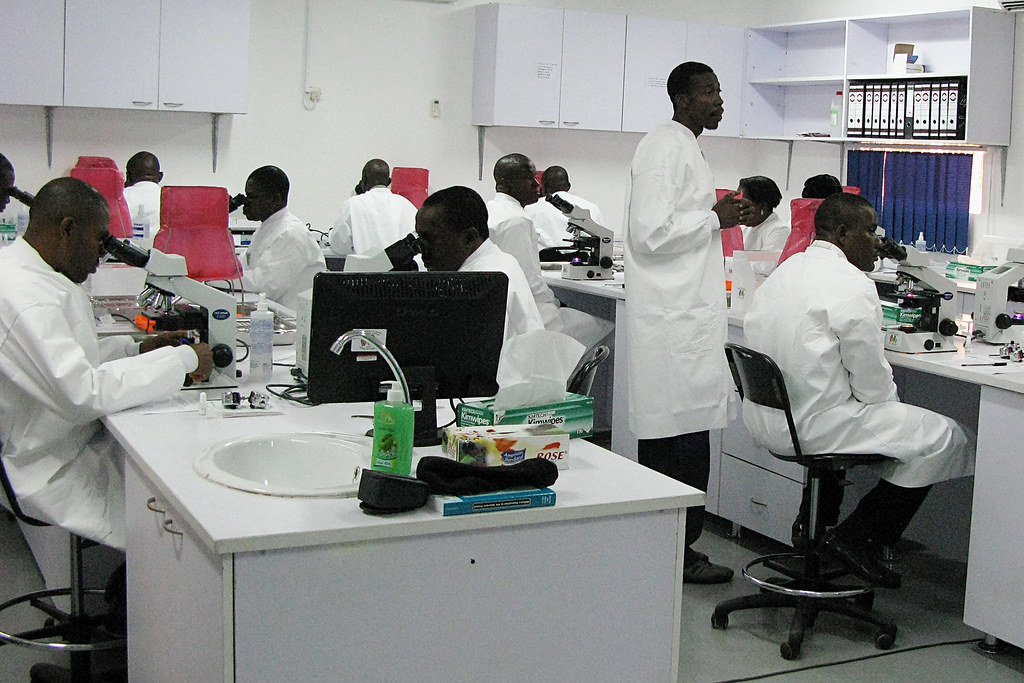
If I had to name the quiet engine behind hematology progress, it would be collaboration. Good blood research depends on people who can connect a sample, a test, a clinical observation, and a treatment decision without losing the thread. That rarely happens in a single office or even a single hospital. It happens across teams.
There are at least four reasons collaboration matters so much. First, blood diseases are biologically complicated. Second, many of the most informative studies need enough patients to produce meaningful evidence. Third, the best ideas often require different kinds of expertise at the same time: laboratory science, pathology, imaging, statistics, pharmacy, and bedside care. Fourth, patients deserve research that is not trapped in one narrow setting when the question could be answered more reliably through a shared effort.
The National Heart, Lung, and Blood Institute’s work with partners is a good example of that broader approach, especially where gene-based cures, data access, and global reach are concerned. Its partners overview shows how blood research is strengthened when institutions, professional groups, and public agencies move in the same direction. That kind of work is less flashy than a headline about a new drug, but it is often what makes the drug possible in the first place.
Collaboration also matters because it helps prevent each center from learning the same lesson in isolation. Shared registries, multicenter trials, and common data standards make it easier to see what is real and what is just local variation. In a field where small differences can affect life-changing decisions, that matters.
For readers who care about the practical side of coordination, there is also a simple truth: research groups still need tools that keep people aligned. For the administrative side of that work, a neutral web app generator can be a useful way to prototype a lightweight dashboard for sample tracking, meeting notes, or follow-up tasks before anything becomes a larger software project. Not every collaboration problem needs a grand system. Sometimes it needs a clearer next step.
What collaboration looks like in practice
- Multicenter trials: several hospitals study the same question so results are stronger and less dependent on one site’s patient mix.
- Shared registries and biobanks: researchers learn from stored samples and long-term follow-up data instead of only single-visit snapshots.
- Cross-disciplinary review: lab scientists and clinicians compare notes early enough to shape better study design.
- Patient partnerships: people living with the condition help researchers understand which outcomes are actually meaningful.
When collaboration works well, it reduces waste. It also reduces the odds that a promising idea gets lost because it was only tested in one place, with one style of care, or in one type of patient. That is especially important in hematology, where the difference between a partial signal and a reliable treatment can be enormous.
What This Means for Patients and Families
New research can sound exciting from the outside and exhausting from the inside. If you are a patient or caregiver, the most useful stance is usually not “How do I follow every study?” It is “How do I know what matters for this diagnosis and what does not?” That question helps keep the conversation grounded.
A practical way to approach a new research discussion is to ask four things:
- What problem is this research trying to solve?
- Is it still in the lab, in early trials, or already influencing care?
- What would make it a fit for someone like me?
- What would make the care team say, “not yet”?
Those questions protect you from overpromising language. They also make room for hope that is specific instead of vague. Specific hope is easier to sustain, especially when the path is long.
It can also help to keep a running note of unfamiliar terms. Here is a simple glossary that often makes hematology discussions easier:
Useful terms in plain language
- Precision medicine: treatment shaped by the biology of the disease and the person who has it.
- MRD: measurable residual disease, or very small amounts of disease that sensitive tests can detect after treatment starts.
- CAR T: a type of cell therapy in which immune cells are changed so they can better recognize cancer.
- Gene therapy: a strategy that aims to fix or compensate for a problem in the body’s genetic instructions.
- Multicenter trial: a study run across more than one hospital or research site.
That list is not meant to make anyone into a scientist by dinner. It is meant to make the next appointment less confusing. In hematology, small clarifications can make a large difference.
Conclusion and Future Outlook
Hematology research is moving in a direction that feels both familiar and new. Familiar, because the field still depends on careful observation, disciplined testing, and long hours of patient follow-up. New, because the tools are becoming more precise and the range of possible treatments is widening. The work ahead is not just about stronger drugs. It is about better matching, better timing, and better cooperation across teams.
The big takeaway is simple: the future of hematology will be shaped by precision testing, innovative cell and gene-based treatments, and the quality of collaboration behind the science. That combination is what turns a promising idea into a treatment that can actually be used, understood, and trusted.
If you would like to keep following this topic on the site, the Latest Lectures page is a good place to continue, and the homepage offers a wider view of the material already published. I find that the safest way to stay informed is not to chase every headline, but to follow the slower, steadier pattern of real research as it becomes ready for practice. That is where the useful story usually lives.
Key points to remember:
- Current hematology research is moving toward more precise diagnosis and treatment matching.
- Innovative therapies such as cell, gene, and pathway-based treatments are expanding the field.
- Collaboration across labs, clinics, and institutions is essential for reliable progress.
- Patients and families benefit most when new research is explained in plain language and tied to real next steps.