When someone you care about is facing Acute Lymphoblastic Leukemia, the hardest part is often not the vocabulary. It is trying to understand what happens next, why one treatment plan is chosen over another, and which questions are worth bringing back to the care team.
Many patients and caregivers arrive with the same concerns:
- What is the difference between chemotherapy, targeted therapy, and newer immune-based treatments?
- When is a stem cell transplant considered, and why is it not the first step for everyone?
- How do doctors weigh effectiveness against side effects and long-term impact?
- What does it mean when a team mentions remission, measurable residual disease, or a clinical trial?
Trusted patient resources from the National Cancer Institute and MedlinePlus make the same point in slightly different language: ALL is usually treated quickly, and treatment decisions depend on subtype, age, response to therapy, and overall health. That is important context, because there is no single “best” treatment for every person with ALL.
By the end of this guide, you will have a clearer way to compare the main treatment paths, understand where each one tends to fit, and prepare for a more grounded conversation with your oncology team. If you want broader background on this site before going deeper, the homepage and Latest Lectures page collect related leukemia and hematology material.
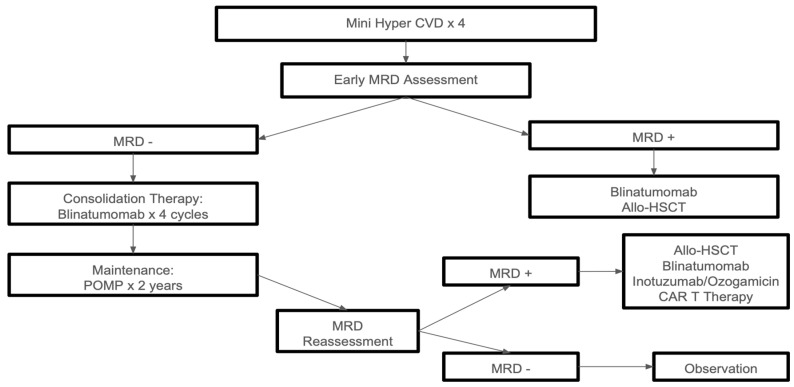
Overview of treatment options
Acute Lymphoblastic Leukemia, often shortened to ALL, is a fast-growing blood cancer that starts in immature white blood cells called lymphoblasts. Because it can progress quickly, treatment usually begins soon after diagnosis. In many cases, the plan is built in phases rather than around a single drug or procedure.
The main treatment strategies usually include:
- Chemotherapy, which remains the backbone of treatment for many patients.
- Targeted therapy or immunotherapy, which may be added when the leukemia has a specific marker or when standard treatment has not worked well enough.
- Stem cell transplantation, which may be considered for higher-risk disease or certain relapse situations.
- Clinical trials and emerging therapies, which may provide access to newer approaches and help improve future care.
A helpful way to think about these options is that they do not always compete with one another. Often, they are sequenced. Someone may begin with chemotherapy, add a targeted drug because of a genetic feature such as Philadelphia chromosome-positive disease, then later discuss transplant or trial enrollment depending on the response.
Key terms that make treatment conversations easier
Remission
Remission means tests no longer show clear evidence of active leukemia at a detectable level after treatment. It is encouraging, but it is not always the same thing as being finished with therapy.
Measurable residual disease (MRD)
MRD refers to tiny amounts of leukemia that can still be found with sensitive tests even when standard tests look reassuring. MRD results often help doctors decide whether treatment should stay the same, intensify, or shift toward another strategy.
Induction, consolidation, and maintenance
These are the broad phases many chemotherapy-based plans use. Induction aims to bring the leukemia into remission, consolidation works to deepen that response, and maintenance helps lower the risk of the leukemia coming back.
Targeted therapy
Targeted therapy uses drugs aimed at specific features of leukemia cells. In ALL, that can include drugs used for Philadelphia chromosome-positive disease or antibody-based therapies used in particular relapse or MRD settings.
A side-by-side comparison
| Treatment strategy | What it is trying to do | When it is often considered | Common tradeoffs |
|---|---|---|---|
| Chemotherapy | Kill leukemia cells throughout the body and bring the disease into remission | Usually the starting point and backbone of treatment | Hair loss, nausea, fatigue, infection risk, low blood counts, and a long treatment schedule |
| Targeted therapy or antibody-based therapy | Attack leukemia cells through a specific marker or mechanism | Often added for certain subtypes, MRD-positive disease, or relapse settings | Still has side effects, may only fit certain patients, and may be used with chemotherapy rather than instead of it |
| Stem cell transplant | Replace blood-forming cells after intensive treatment and lower relapse risk in selected cases | Higher-risk disease, poor early response, or relapse in some patients | Serious short- and long-term risks, longer recovery, donor matching issues, and not everyone is a candidate |
| Clinical trial or emerging therapy | Test newer options and improve access to treatments that may not yet be standard | Relapsed disease, specific subtypes, or when the team is comparing strong evidence-based options | Extra screening, narrower eligibility rules, and uncertainty about whether the newer option will outperform current standard care |
Chemotherapy vs. targeted therapy
For many families, this is the comparison that matters most early on. Chemotherapy is still the standard backbone of care for many people with ALL, but it is no longer the whole story.
What chemotherapy does well
Chemotherapy can treat leukemia cells throughout the body and has decades of evidence behind it. It is often structured in phases, which gives the care team a roadmap: first to push the disease into remission, then to deepen that response, then to help prevent relapse. For both adults and children, that structured backbone still matters.
The main limitation is that chemotherapy does not only affect leukemia cells. It can also affect healthy fast-dividing cells, which is why side effects such as low blood counts, infections, mouth sores, fatigue, nausea, and hair loss are common parts of the conversation. The exact experience varies widely, but the burden can be substantial.
How targeted therapy differs
Targeted therapy is meant to act on a more specific vulnerability in the leukemia. In ALL, this may include drugs used for Philadelphia chromosome-positive disease or antibody-based therapies such as blinatumomab or inotuzumab in selected settings. The Leukemia & Lymphoma Society provides a useful patient-facing overview of how subtype and treatment stage can change the plan.
It can be tempting to hear “targeted” and assume “easier” or “milder.” That is not always true. These treatments may spare some healthy tissue compared with traditional chemotherapy, but they come with their own monitoring needs and side effects. Some are used only for certain subtypes. Others are used alongside chemotherapy rather than replacing it.
Which one is more effective?
Usually, this is not an either-or question. For many patients, chemotherapy is the foundation, and targeted treatment improves the plan when the biology of the leukemia suggests it should. A treatment that looks less intense on paper may still be the wrong choice if it does not match the leukemia subtype, while a more intensive plan may be worth it if it meaningfully lowers relapse risk.
In practical terms, effectiveness is often judged by several questions at once:
- Did the leukemia go into remission?
- Did MRD testing become negative or improve enough to change the next step?
- Is the response durable, or is the leukemia likely to return quickly?
- Can the patient tolerate the plan safely enough to complete it?
The best treatment plan is not only the one that can work. It is the one that can work for this patient, with this subtype, at this moment.
Where stem cell transplantation fits
Stem cell transplantation can sound like the “strongest” treatment, so patients sometimes assume it is automatically the best option. In reality, transplant is usually reserved for specific situations because it can offer important benefits but also carries serious risks.
What the procedure involves
In broad terms, a patient receives intensive treatment to clear the leukemia and then receives healthy blood-forming stem cells, often from a donor, to rebuild the bone marrow. This process can help create a new blood and immune system, and in some cases it lowers the chance of the leukemia returning.
When doctors may recommend it
Transplant may be discussed when the leukemia has higher-risk features, when MRD remains a concern after early treatment, or when the disease comes back after remission. Age, overall health, donor availability, and the exact subtype all influence the decision. That is why two patients with the same diagnosis on paper may still receive very different advice.
Benefits and risks
The potential benefit is clear: for selected patients, transplant can provide a stronger chance of long-term disease control. The risks are also real. Recovery can be prolonged. Infection risk can be high. Graft-versus-host disease and other complications can affect quality of life for months or longer. Because of that balance, transplant is usually considered carefully rather than automatically.
If transplant is on the table, it often helps to bring a short list of focused questions to the visit:
- What specific risk factor is making transplant part of the discussion?
- What would the expected plan be if transplant were not chosen?
- What short-term complications are most likely in this situation?
- How will the team measure whether the benefit is likely to outweigh the burden?
Emerging treatments and clinical trials
One of the most important changes in ALL care is that the conversation no longer stops with chemotherapy alone. Newer antibody-based therapies, immune therapies, and cell-based approaches have expanded options for some patients, especially in relapse or MRD-positive settings.
That does not mean every “new” treatment is automatically better. It means the menu is broader, and the decision process is more individualized. Some newer options may offer another path when standard treatment has not been enough. Others may move earlier in care only after strong evidence accumulates.
Why clinical trials matter
Clinical trials are not only a last resort. In many cancer centers, they are part of how the best available evidence gets built. Trials may offer access to promising therapies, but they also involve eligibility rules, extra visits, and a level of uncertainty that should be discussed openly. The public ClinicalTrials.gov search for acute lymphoblastic leukemia can help families see how many studies are active and what types of questions researchers are trying to answer.
Questions worth asking about an emerging option
- Is this newer treatment replacing part of standard therapy, or being added to it?
- Is the goal to improve remission depth, reduce relapse risk, or help after relapse?
- What side effects are different from standard chemotherapy side effects?
- What evidence already exists in patients with a similar subtype or age group?
Those questions may sound simple, but they lower confusion fast. When the treatment list gets longer, the next useful step is not to memorize every drug name. It is to understand the purpose of each option.
How patients and caregivers can make a more informed decision
If the number of options feels overwhelming, a practical frame can help. Try organizing each treatment discussion around four points:
- Goal: Is this treatment meant to induce remission, deepen it, prevent relapse, or manage relapse?
- Fit: Is it being recommended because of age, subtype, MRD status, prior response, or overall health?
- Burden: What side effects, hospital time, transfusions, infection precautions, or long-term issues are most relevant?
- Fallback plan: If this treatment does not work as hoped, what is the next step?
Good treatment decisions are rarely about choosing the most dramatic option. They are about choosing the most appropriate one with clear eyes. It is completely reasonable to ask the team to explain why one path is being favored over another in plain language.
Many families also find it helpful to keep a notebook or shared document with medication names, test results, MRD updates, and questions for the next visit. That small habit can make difficult appointments feel more manageable.
Conclusion
Comparing treatment strategies for ALL becomes easier once the options are put in context. Chemotherapy often remains the foundation. Targeted or immune-based treatments can improve the plan for selected patients. Stem cell transplant can be important for higher-risk or relapsed disease, but it is not the right fit for everyone. Clinical trials help open access to newer options while also improving the future standard of care.
The next helpful step is usually not to decide everything alone at home. It is to take this framework back to the oncology team and ask what to expect, why this plan fits the leukemia in front of them, and which tradeoffs matter most right now. Clear questions do not slow treatment down. They help people move through it with more confidence and less avoidable confusion.